How to Greet in Dagbani: Common Dagbani Greetings and Their Meanings
In Dagbon, greetings are more than polite expressions — they reflect the deep respect, humility, and communal spirit that shape Dagomba society.
Knowing how to greet in Dagbani is one of the first and most important steps in learning the language. Greetings in Dagbani are not just words; they are bridges of friendship and signs of good character.
When a Dagomba person greets, they are acknowledging your presence, showing peace, and inviting good fortune into the interaction. Whether you meet a stranger in Yendi or an elder in Tamale, your greeting sets the tone for everything that follows.
Greeting Etiquette and Respect in Dagbani
In Dagbon culture, the way you greet matters as much as what you say. Every greeting shows your upbringing, respect, and understanding of tradition.
Here are some cultural rules to remember:
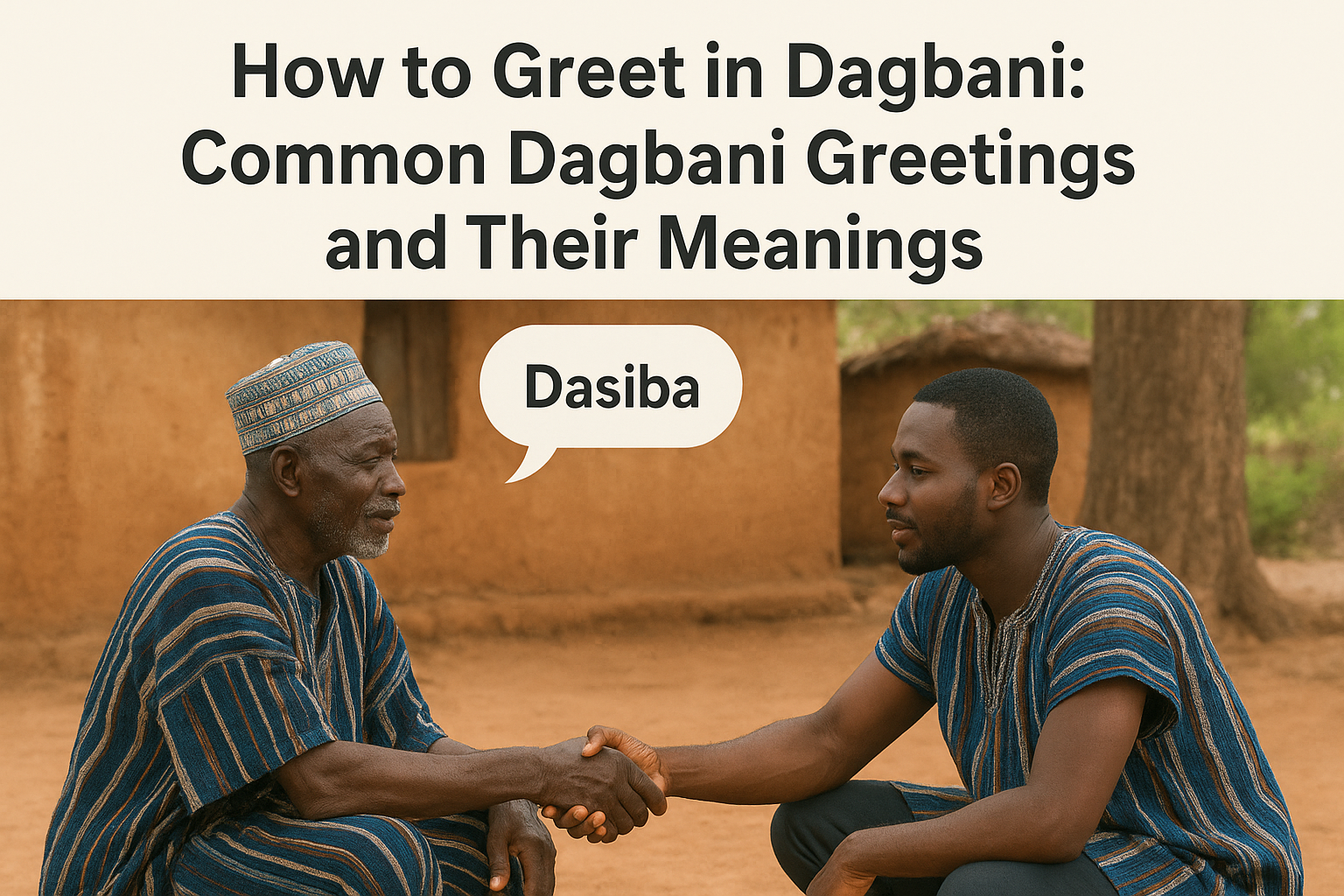
- When greeting an elder or respected person, you should squat before greeting.
- A younger person does not greet first; instead, you squat quietly until the elder greets you.
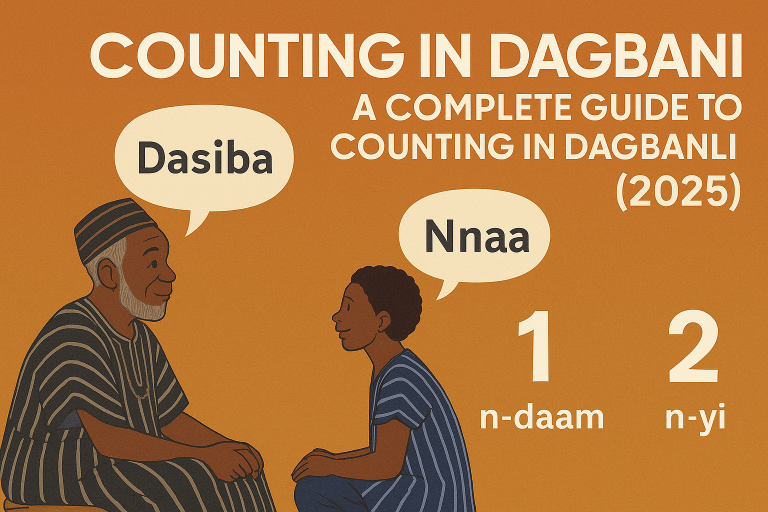
- Your response to an elder’s greeting is “Nnaa”.
- Stay squatting throughout the greeting until the elder says “Gaafara” (Excuse me), allowing you to stand up.
- Among equals or friends, greetings are exchanged freely without squatting.
Understanding these cultural norms makes your Dagbani greetings meaningful and authentic.
Common Dagbani Greetings and Responses
Let’s look at the most common Dagbani greetings and how they are used daily.
| English | Dagbani Phrase | Pronunciation | Common Response |
| Good Morning | Dasiba | Da-si-ba | Nnaa |
| Good Afternoon | Antire | An-ti-re | Nnaa |
| Good Evening | Aniwula | A-ni-wu-la | Nnaa |
| Good Night | Naawuni ni ti biɛɣu | Naa-wu-ni ni ti biɛ-yu | Ami (Amen) |
| Excuse me (before entering) | Gaafara | Gaa-fa-ra | Garima / Kpemna (Come in) |
These are the basic expressions to start with if you want to learn how to greet in Dagbani. You will hear them in every Dagbon community — from early morning market chatter to family gatherings in the evening.
Time-Based Greetings in Dagbani
Greetings in Dagbani change depending on the time of day:
- Morning greetings in Dagbani: Dasiba!
- Afternoon greetings in Dagbani: Antire!
- Evening greetings in Dagbani: Aniwula!
- Night greetings in Dagbani: Naawuni ni ti biɛɣu!
Example Dialogue (Singular)
- Elder: Dasiba, Kumtili. (Good morning, Kumtili.)
- Kumtili (squatting): Nnaa, Pagnaa.
Example Dialogue (Plural)
- Elder: Antire, nira! (Good afternoon, people!)
- Group: Nnaa!
Using these Dagbani greetings properly helps you sound natural and respectful when speaking with Dagomba people.
Welcoming and Polite Expressions in Dagbani
Dagbon people are known for their hospitality, and traditional Dagbani greetings for welcoming visitors are warm and expressive.
| English | Dagbani (Singular) | Dagbani (Plural) | Common Response |
| Welcome | Na a paabu na | Ni yi paabu na | Nnaa |
| Welcome from your journey | Na a gɔrim | Ni yi gɔrim | N-gomina / N-kuli-mina |
Example Dialogue:
- Kasi: Na a gɔrim, Kumtili! (Welcome from your journey, Kumtili!)
- Kumtili: N-gomina, Kasi. (Thank you!)
Everyday Conversation Phrases in dagbani
Here are other common Dagbani greetings and responses used daily:
| English | Dagbani | Response |
| How are you? | Ka di be wula? | Alaafee (I’m fine) |
| Did you sleep well? | A gbihira? | Mm n gbihiya (Yes, I slept well) |
| Are you there? | Yi beni? | Mm, ti beni (Yes, we are here) |
| How is your health? | A niŋbuna be wula? | Alaafee |
| How is your husband? | A yidana be wula? | Alaafee |
| How is your house? | A yiŋ be wula? | Alaafee |
| How is life? | Kawula nyaa behagu? | Alaafee |
| How is it (general)? | Di be wula? | Shee alaafee (Everything is fine) |
You will hear these phrases in nearly every conversation. They show empathy and connection, which are highly valued in Dagbon society.
Sample Dialogues in Dagbani
Dialogue 1: Morning Greeting
Elder: Dasiba! (Good morning)
Younger person: Nnaa! Ka di be wula? (Yes! How are you?)
Elder: Alaafee beni. (I am fine.)
Dialogue 2: Entering a Room
Visitor: Gaafara! (Excuse me!)
Host: Garima! (Come in!)
Dialogue 3: Evening Greeting
Greeter: Aniwula! (Good evening)
Responder: Nnaa. Ka di be wula? (Yes, how are you?)
Greeter: Alaafee. Ti paɣa! (I’m fine. We thank God!)
Dialogue 4: Good Night
Greeter: Naawuni ni ti biɛɣu. (Good night!)
Responder: Ami. (Amen!)
Practising these short conversations helps learners remember how to greet in Dagbani naturally and confidently.
Why Learning Dagbani Greetings Matters
Learning Dagbani greetings is more than just learning words — it is learning how to show respect and connect with people.
If you are from the Dagbon Kingdom, knowing how to greet in Dagbani helps preserve your heritage. If you are from outside Dagbon, using traditional Dagbani greetings earns you admiration and instantly warms hearts.
When you start a conversation with “Dasiba” or “Antire,” you are saying, I honour your culture. That small gesture builds friendship, trust, and understanding — especially between generations or among those living abroad.
“A single greeting can open a thousand doors.” — Dagbon proverb
Start Learning Dagbani Today
Now that you know how to greet in Dagbani, why stop there? Join our online Dagbani language course on DagbonKingdom.com/Learn-Dagbani and continue your journey.
Our structured lessons cover pronunciation, grammar, listening practice, and daily conversation — all designed to help you speak, understand, read, and write Dagbani confidently.
For more free lessons and cultural insights, visit the Learn Dagbani page and subscribe to our updates.
External Resource
If you want to explore more Dagbani phrases, visit Omniglot’s Dagbani language page.