Why Every Dagomba Parent Should Teach Their Children Dagbani — Even If They Live Abroad
A few days ago, I came across a Facebook post that left many of us reflecting on our identity. A South African man shared how he greeted a small girl in her mother tongue, Sepedi, and instead of replying, she ran inside shouting:
“Daddy, daddy, a man who speaks your language is at the gate!”
The man said he was devastated.
Shortly after, a Dagomba politician, Alhaji Kamal-Deen Abdulai, posted something similar:
“I’m really ashamed of myself. My kids can’t speak Dagbanli and rather waxing eloquently in English! Can’t AU agree on Swahili as an official language for Africans?”
His post went viral because it echoed a painful truth many African parents are living today.
Let’s speak the uncomfortable truth: many Dagomba parents feel proud when their children speak fluent English. We smile when they pronounce words perfectly, when they read Shakespeare, when they debate in class.
But when our children stumble over “Dasiba” or can’t respond to their grandmother’s greetings in Dagbani, we laugh it off. We make excuses. We say, “They’ll learn it later.”
But when is later?
Somewhere along the way, we bought into a lie—that teaching our children Dagbani language would “confuse” them, would “spoil” their English, would limit their future.
So we speak English at home. We send them to English-only schools. We celebrate their foreign accents.
And then we attend funerals in Yendi where our children stand silent, unable to greet the elders, unable to understand the prayers, unable to feel the weight of their own heritage.
English may open doors to the world. But Dagbani opens the door to the soul.
Why Teaching Your Child Dagbani Language Is Non-Negotiable
To teach your child Dagbani language is not a favor you’re doing them. It’s not “nice to have.” It’s not optional.
It is their birthright.
Here’s what children gain when they speak Dagbani:
1. Identity That Cannot Be Shaken
Children who know their language know who they are. They don’t question their place in the world. They walk into any room—London, New York, Accra—and carry Dagbon with them.
2. Connection Across Generations
When your child speaks Dagbani, they can sit with their grandfather and hear stories of kingdoms and warriors. They can laugh with their grandmother. They can understand the wisdom that lives in proverbs and riddles.
Without Dagbani, that bridge collapses. And when it does, something precious dies with the elders.
3. Cognitive and Emotional Strength
UNESCO research confirms that children who learn in their mother tongue develop stronger cognitive abilities, better emotional intelligence, and deeper critical thinking skills. Multilingual children have mental flexibility that monolingual children don’t.
4. Cultural Preservation
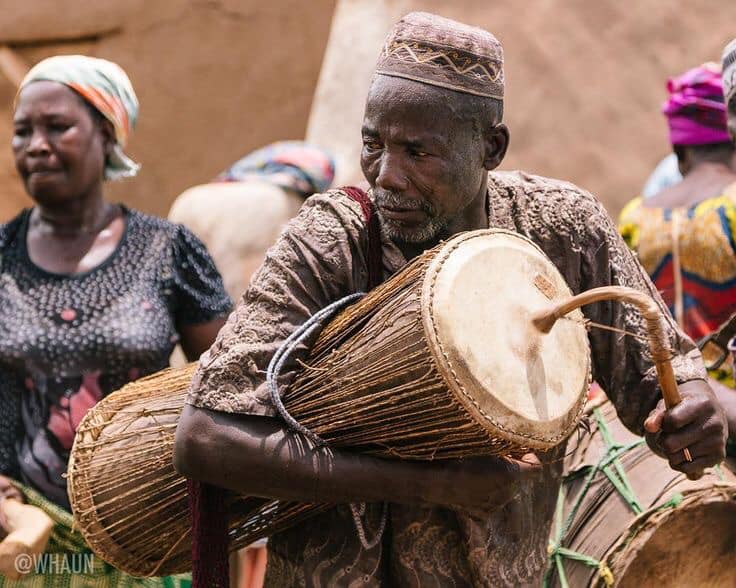
Dagbani carries the soul of Damba Festival, Bugum Festival, Fire Festival. It holds the meaning behind the drumming, the dancing, the regalia. Without the language, these traditions become performances, empty of meaning.
5. Economic and Social Advantage
Research from the African Development Bank shows that Africans who speak both indigenous languages and international languages are better negotiators, leaders, and innovators. They move between worlds with ease.
If we lose Dagbani, we don’t just lose words. We lose who we are.
The Devastating Cost of Losing Our Mother Tongue
Right now, across Dagbon, there are children who:
- Cannot greet their own grandparents properly
- Feel like outsiders at weddings and funerals
- Can’t tell their children about Naa Gbewaa and the history of Dagbon
And it’s not their fault. It’s ours.
We thought we were giving them the world by teaching them English. But we took away their home.
The painful irony? They can recite Shakespeare, but they don’t know a single Dagbon proverb. They can sing pop songs, but not a lullaby their great-grandmother sang.
We are raising cultural orphans in their own homeland.
How One Family Chose Dagbani Over Approval
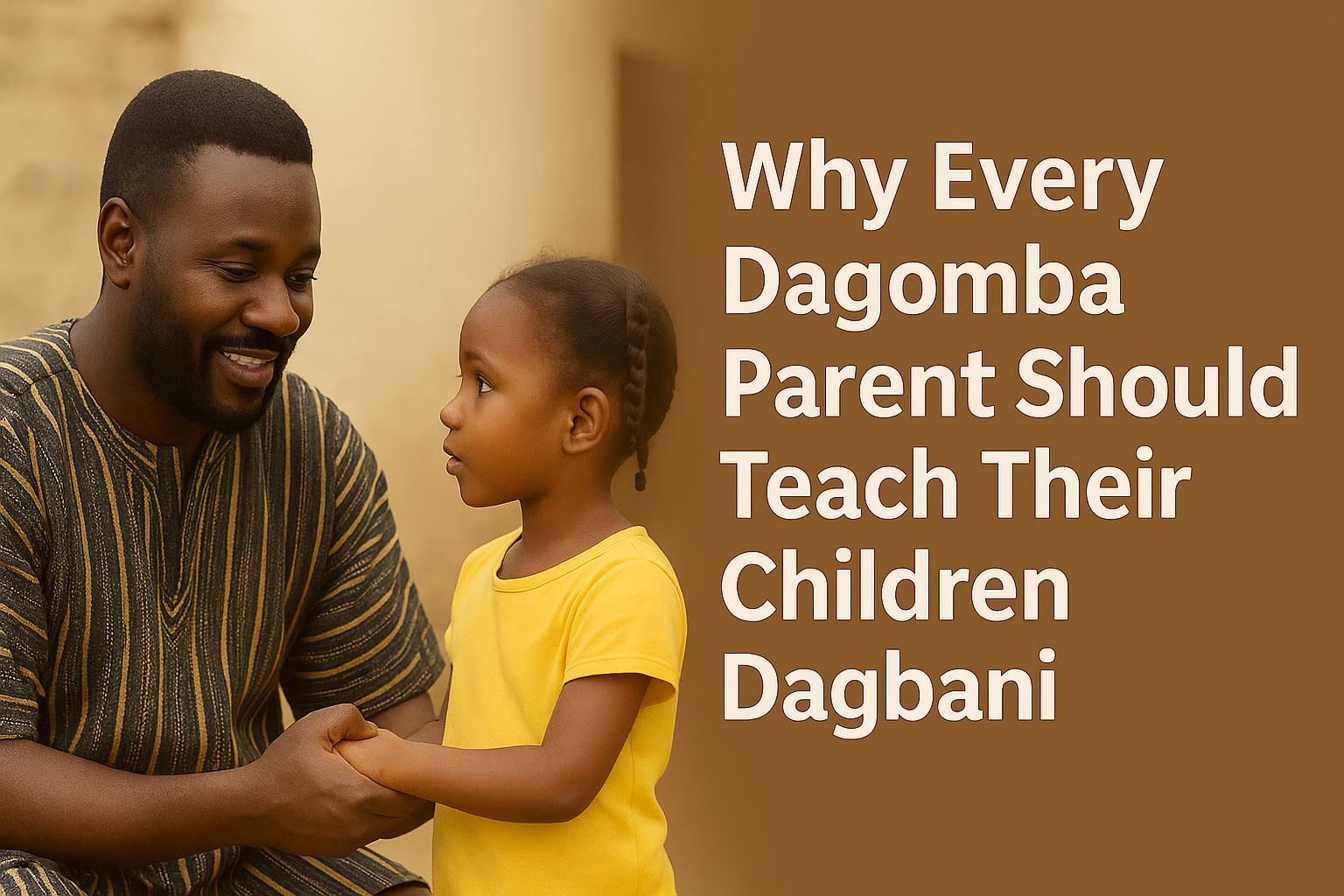
In our home, my wife and I made a decision that surprises people: we speak only Dagbani to our daughter.
When friends and family visit and speak English to her, she doesn’t respond. And when we explain, “We don’t speak English to her,” people are shocked.
“Why would you do that?” “Won’t she struggle in school?” “Isn’t that limiting her?”
Here’s our answer: We are Dagombas. Why should speaking our own language shock anyone?
Our daughter will learn English—she’s surrounded by it everywhere. Schools teach it. TV broadcasts it. The internet speaks it.
But if we don’t teach her Dagbani, who will?
We want her to know that speaking English is useful. But knowing who you are is power.
We want her to walk into any room in the world and say with pride: “N yuli Kasi. N yela Dagbana” (My name is Kasi. I am a Dagomba).
Simple Ways to Teach Your Child Dagbani Language at Home
You don’t need to be a linguist or a teacher. You just need to make a choice—today—to bring Dagbani back into your home.
Start With Daily Conversations
Use Dagbani for everyday moments:
- Morning greetings: “Dasiba!” instead of “Good morning”
- Meals: “Kam na ti di” (Come and eat) instead of “Come for food”
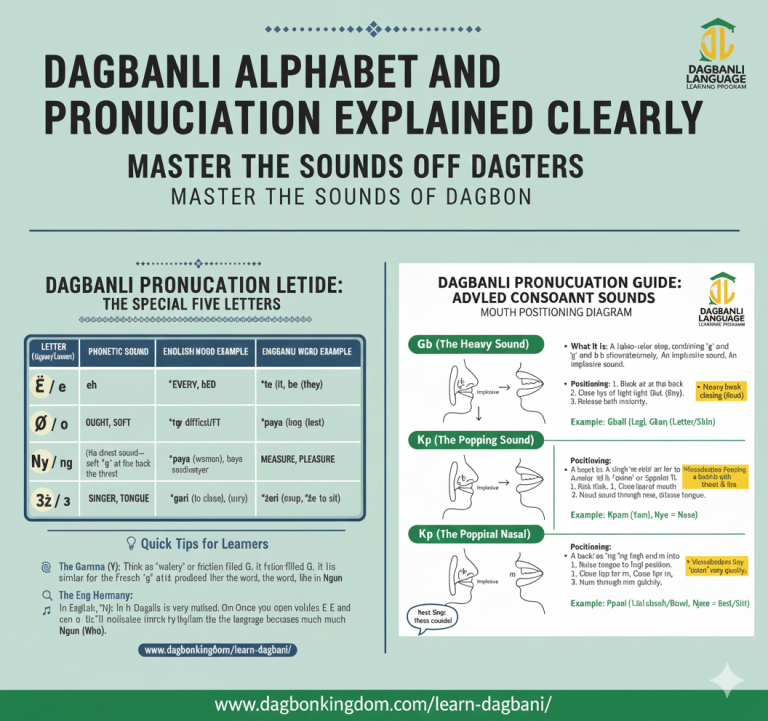
Simple words matter: Dalya (Shirt), Kɔm (water), Bindirigu (food), Namda (sandals).
Use Music and Stories
Children learn through rhythm and repetition. Sing Dagbani lullabies. Tell folktales. Share
Learn Together Online
If you’re not fluent yourself, learn alongside your child. There are resources available that make learning Dagbani simple and practical for families.
Label Your Home in Dagbani
Put sticky notes on household items with Dagbani words
Connect With Elders
Video call grandparents. Let your children hear Dagbani spoken with love and authority. Nothing replaces the warmth of an elder’s voice.
Correct With Kindness
When your child makes a mistake, smile and gently repeat the correct word. Celebrate effort, not perfection.
Why Diaspora Parents Hold the Key to Dagbani’s Future
For Dagombas living abroad—in the UK, USA, Canada, or across Europe—the challenge is even greater. Your children are surrounded by foreign languages every day. Dagbani becomes something they only hear during occasional phone calls to Ghana.
But here’s the truth: diaspora parents have the power to keep Dagbani alive.
You are raising the next generation of Dagbon leaders, thinkers, and ambassadors. If they lose the language, they lose the connection.
What you can do:
- Organize weekend Dagbani storytelling sessions with other families
- Create online Dagbani learning groups for children
- Play Dagbani music and movies at home
- Make annual trips to Yendi or Tamale so children experience the culture firsthand
- Refuse to let English dominate every conversation
When you teach your children Dagbani abroad, you’re telling the world: We may live far away, but our roots run deep.
The Choice We Make Today Echoes for Generations
Our parents gave us Dagbani. They didn’t ask if it was convenient. They didn’t worry if it would “confuse” us. They simply spoke it, and we became Dagombas.
Now it’s our turn.
Every time you speak Dagbani at home, you are preserving 1,000 years of Dagbon history.
Every time your child says “Dasiba” instead of “Good morning,” you are planting a seed.
Every time they say “N yuli Maltiti” instead of “My name is Maltiti,” they are claiming their identity.
Let’s stop being ashamed. Let’s start speaking.
Let’s make it normal again to hear children greet in Dagbani.. Let’s make it powerful again to know that language is not a barrier—it is a bridge.
The question is not whether your child will learn English. They will.
The question is: Will they know who they are?
Teach your child Dagbani language. Start today. Start now.
Because once it’s gone, it’s gone forever.