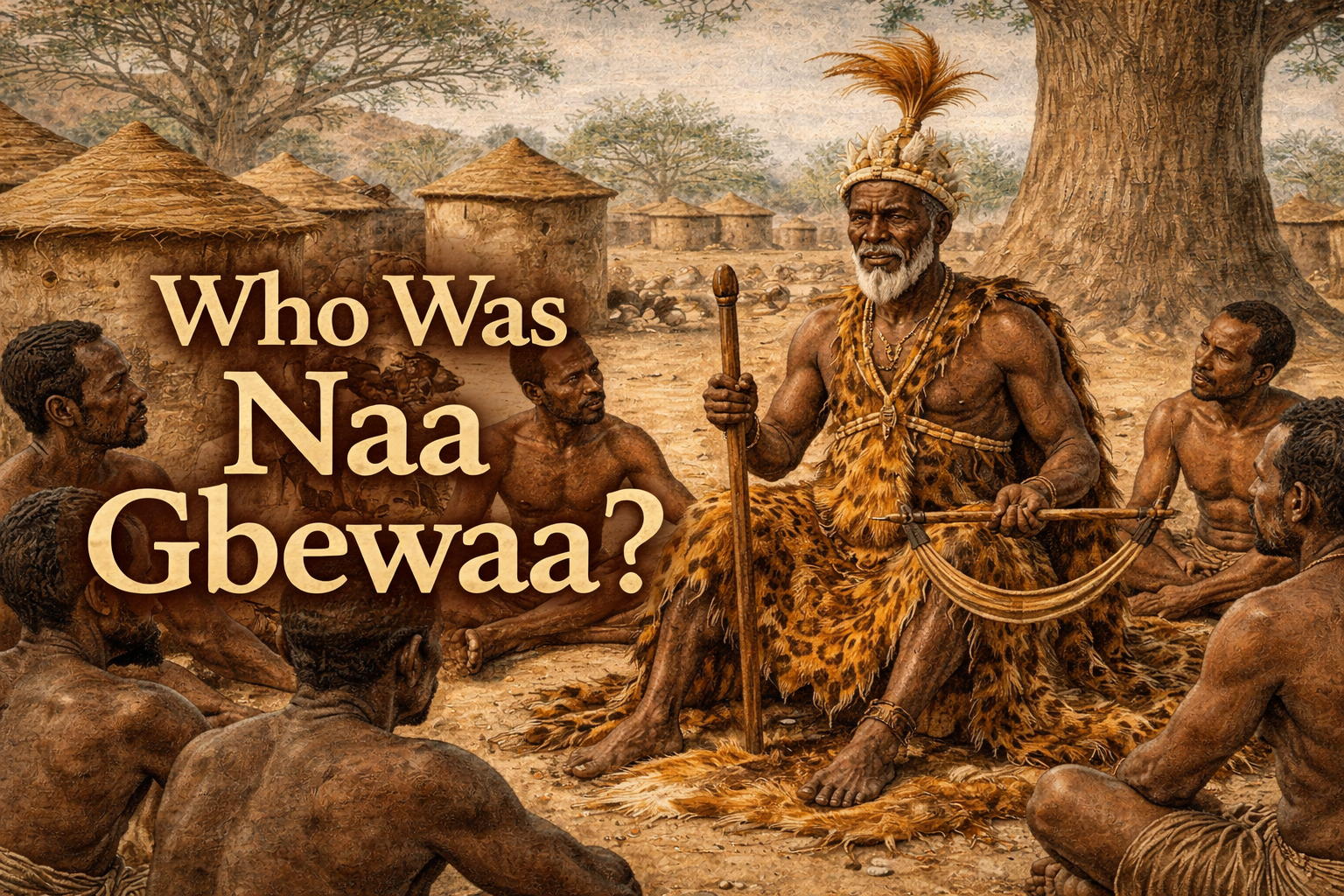
Who Was Naa Gbewaa? The Foundational Figure of Dagbon
Naa Gbewaa stands at the heart of Northern Ghana’s political and cultural history, shaping how people understand identity, authority, and belonging across multiple kingdoms. Who is Naa Gbewaa? This fundamental question echoes through oral accounts, drum histories, and genealogies—not only in Dagbon, but also in Mamprugu, Nanumba, and Mossi traditions.
Understanding Naa Gbewaa requires separating legend from historical meaning, praise language from documented fact, and symbolism from straightforward narrative. Who is Naa Gbewaa is neither a simple question nor one with a singular answer, but it reveals profound truths about leadership, migration, and the formation of centralized authority in West Africa.
This comprehensive exploration examines Naa Gbewaa by investigating his origins, his role as a migrant leader, his encounters with aboriginal communities, and his lasting legacy across the Gbewaa states.
Table of Contents
- Why Naa Gbewaa Matters in Dagbon History
- The World Before Naa Gbewaa Arrived
- Origins and Ancestry of Naa Gbewaa
- Naa Gbewaa as a Migrant Leader
- Encounters Between Naa Gbewaa and Aboriginal Communities
- How Naa Gbewaa Shaped Centralized Authority
- The Legacy of Naa Gbewaa and the Gbewaa States
- Separating History from Legend in Naa Gbewaa Stories
- Common Misunderstandings About Naa Gbewaa
- Why Understanding Naa Gbewaa Matters Today
Why Naa Gbewaa Matters in Dagbon History
To understand who is Naa Gbewaa, we must first grasp why his name carries such weight across Northern Ghana. Naa Gbewaa appears repeatedly in oral traditions, serving as a central reference point for multiple kingdoms and political systems.
Naa Gbewaa matters because he represents a crucial turning point in political organization. He is remembered as a foundational political ancestor—not because he was the first human to inhabit the land, but because his lineage became intimately connected to the rise of organized rule and kingship.
Many people mistakenly assume that Dagbon began with Naa Gbewaa. This misunderstanding erases centuries of pre-existing communities, aboriginal settlements, and established social systems. Before Naa Gbewaa, people already lived, farmed, hunted, and worshipped on the land. His importance lies in what followed him, not in erasing what came before.
The story of Naa Gbewaa sits within a longer historical continuum. Who is Naa Gbewaa? He represents transformation rather than creation—the shift from decentralized, community-based leadership to more centralized political structures. This distinction is crucial for accurate historical understanding.
Oral tradition does not always speak in straight lines. History in Dagbon is layered, not linear. Stories about Naa Gbewaa blend historical memory, political symbolism, and cultural values. Understanding Naa Gbewaa requires careful interpretation that respects tradition while recognizing its symbolic language.
This exploration does not seek to reduce Naa Gbewaa to myth, nor to transform him into a modern-style king. Instead, it places Naa Gbewaa carefully within his historical context, where memory, tradition, and political change intersect.
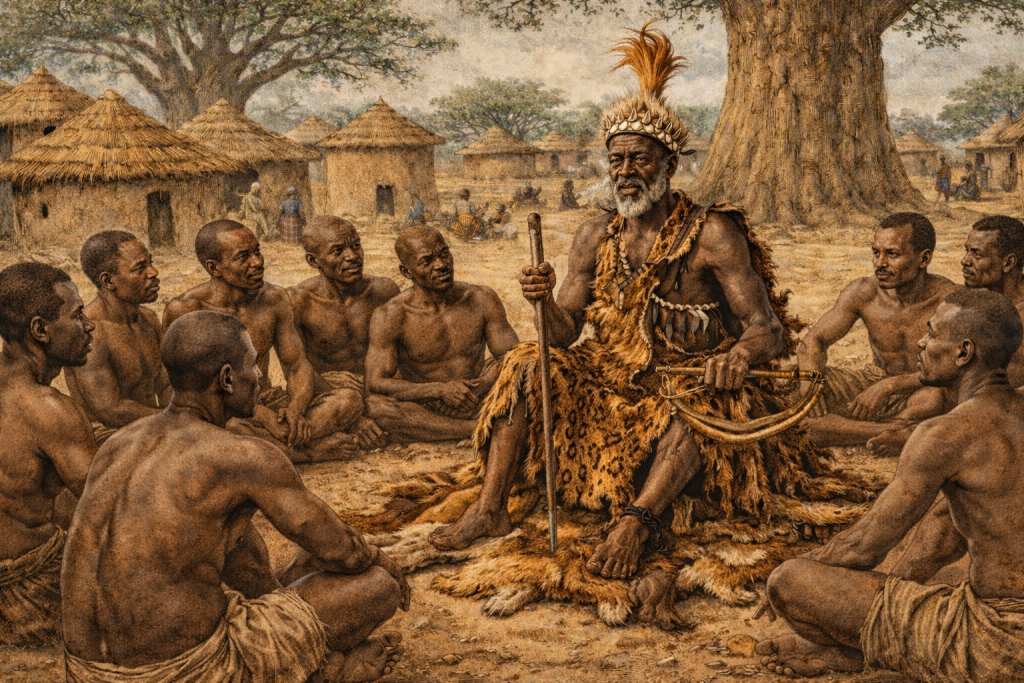
The World Before Naa Gbewaa Arrived
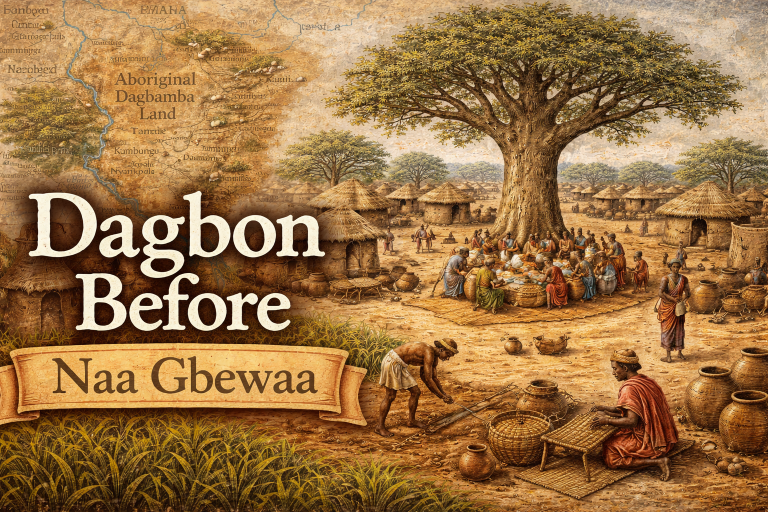
Aboriginal Dagbamba communities lived across the territory, guided by elders, land custodians, and spiritual leaders who understood both the physical environment and its unseen spiritual forces. These early inhabitants were not primitive or disorganized—they maintained sophisticated systems of governance, land management, and social cohesion.
Land was held in trust by earth priests and custodians, not ruled by royal decree. These spiritual leaders protected sacred places, mediated between communities and ancestral spirits, and ensured proper ritual observance. Their authority came from spiritual knowledge and connection to the land, not from political power.
Understanding who is Naa Gbewaa requires first understanding the world he entered. Before the time of Naa Gbewaa, the land that later became Dagbon already possessed structure, order, and established communities. There was no central kingship, but leadership existed in other forms.
Elders settled disputes through dialogue and consensus-building. Social life revolved around agricultural cycles, kinship ties, and ritual obligations. Authority derived from age, accumulated wisdom, and spiritual responsibility—not from conquest, inherited skins, or centralized political control.
This pre-Gbewaa society was functional and stable. Communities cooperated during planting and harvest seasons. Marriages created alliances between families. Rituals marked important life transitions and maintained connections with ancestors. The system worked because it was deeply rooted in shared values and mutual dependence.
Understanding this context is essential for grasping the full story of Naa Gbewaa. Without it, his narrative appears sudden and confusing, as if political authority dropped from the sky. In reality, Naa Gbewaa emerged into a world that already had people, customs, and functioning systems of life.
Naa Gbewaa did not arrive to empty land. He became part of a long transition—from small, community-based leadership to wider political organization. The significance of Naa Gbewaa lies in how his lineage connected these earlier systems to new forms of authority. Naa Gbewaa was not the beginning of Dagbon, but part of the bridge between old ways and emerging structures.
Origins and Ancestry of Naa Gbewaa
The origins of Naa Gbewaa are preserved mainly through oral tradition, and these traditions do not always tell the story identically. Different accounts emphasize different aspects—some focus on ancestry and lineage connections, while others highlight movements of Naa Gbewaa across regions before settling in politically significant areas.
What remains consistent across variations is the connection of Naa Gbewaa to a wider Gbewaa lineage. Through Naa Gbewaa, several northern states trace shared ancestry, which explains why Dagbon, Mamprugu, Nanumba, and Mossi kingdoms are often described as “cousin” polities. This shared lineage operates on political and cultural levels as much as genealogical ones.
Who is Naa Gbewaa in terms of early life? Oral traditions typically describe Naa Gbewaa within a context of movement, interaction, and evolving leadership rather than fixed kingship. The geographic background associated with Naa Gbewaa reflects a world where migration was common and authority was earned gradually through demonstrated competence and respect.
Naa Gbewaa is remembered not as a crowned king in the modern sense, but as a respected ancestor whose descendants shaped later political systems. This distinction matters because it prevents anachronistic interpretations that impose contemporary notions of monarchy onto ancient political arrangements.
Different traditions describe the origins of Naa Gbewaa differently because oral history serves multiple purposes. Some versions aim to establish political legitimacy for ruling families. Others emphasize unity among related peoples. Praise language often enlarges figures like Naa Gbewaa to reflect their importance rather than their exact biography.
These differences do not weaken the historical understanding of Naa Gbewaa; instead, they demonstrate how deeply the memory of Naa Gbewaa is woven into the political and cultural fabric of the region. Each variation preserves certain truths while serving specific social functions within the communities that tell them.
Understanding the origins of Naa Gbewaa requires patience and balance—listening carefully to tradition while recognizing its symbolic language. Only through this balanced approach can we appreciate who is Naa Gbewaa and why his name continues to matter across Northern Ghana.
Naa Gbewaa as a Migrant Leader
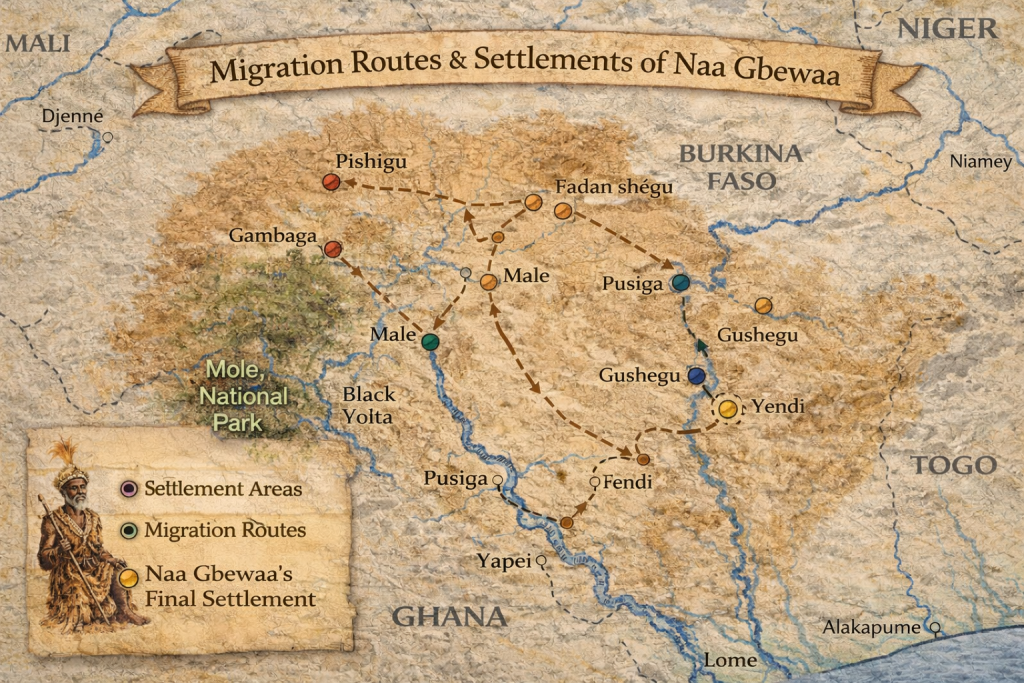
Oral tradition presents Naa Gbewaa not as a ruler who emerged suddenly in one fixed location, but as a migrant leader whose life was fundamentally shaped by movement. Stories linked to Naa Gbewaa speak of journeys across regions, periods of settlement, and continued movement in search of stability, security, and community acceptance.
Migration was extremely common during the historical period of Naa Gbewaa. Communities moved for various reasons: changing climate patterns, pressure from conflicts, the search for fertile agricultural land, or the need for safer settlements. Movement was not a sign of weakness or failure—it was a normal adaptive strategy for survival and prosperity.
Leaders during this era were often those who could guide people safely through dangerous territories, negotiate access to land with existing inhabitants, and maintain group unity during journeys. Naa Gbewaa reflects this pattern of mobile leadership rather than sedentary rulership.
Settlement patterns associated with Naa Gbewaa reflect this migratory reality. Rather than founding a single capital city in the modern sense, Naa Gbewaa is linked to several places where his presence or influence was remembered. These locations gained political importance later because descendants of Naa Gbewaa settled there and built political structures upon earlier foundations.
The leadership style of Naa Gbewaa, as preserved in tradition, was not based on sudden conquest or military domination. Instead, Naa Gbewaa relied on patience, dialogue, and negotiation. Authority was built gradually through demonstrated trust and relationship-building, not through force alone.
This approach allowed the lineage of Naa Gbewaa to take root in societies that already existed, rather than attempting to destroy or completely replace them. Naa Gbewaa worked within existing social frameworks, adapting to local customs while gradually introducing new political arrangements.
Understanding Naa Gbewaa as a migrant leader helps explain why his legacy spread across multiple kingdoms. Descendants of Naa Gbewaa carried his name and political model to different territories, adapting it to local conditions while maintaining connections to a shared ancestral source.
Encounters Between Naa Gbewaa and Aboriginal Communities
As Naa Gbewaa and those associated with him moved and settled, they encountered aboriginal communities who already inhabited the land. These earlier inhabitants were not leaderless or unorganized—they had landowners, earth priests, elders, and spiritual custodians who held authority over territory and ritual life.
Meetings between the group of Naa Gbewaa and earlier inhabitants were complex, involving careful negotiation rather than simple conquest. In many cases, access to land required approval from land custodians and spiritual leaders. The story of Naa Gbewaa includes these interactions, showing how political change occurred through diplomacy alongside other means.
Rituals played crucial roles in these encounters involving Naa Gbewaa. Newcomers performed ceremonies to seek acceptance from the earth and ancestors. These spiritual practices were not mere formalities—they represented genuine recognition that the land already “belonged” to spirits and ancestors who required proper respect.
Elders from both the incoming groups with Naa Gbewaa and aboriginal communities discussed terms of settlement and coexistence. These discussions covered land usage rights, water access, hunting territories, and the resolution of potential conflicts. Agreements were reached through patience and mutual concession.
Alliances played essential roles in these encounters. Strategic marriages linked families and reduced tensions between groups. When ruling families descended from Naa Gbewaa married into aboriginal communities, it created kinship bonds that transcended the newcomer-original inhabitant divide. Children born from these unions belonged to both groups, fostering integration.
Agreements were also made to share labor, resources, and protection. During planting and harvest seasons, communities worked together. In times of external threat, they defended one another. Over time, these practical arrangements created bonds that developed into shared identity under the umbrella of Naa Gbewaa lineage.
It is crucial to avoid the myth of total displacement when studying Naa Gbewaa. The historical record does not support the idea that aboriginal communities were completely driven away or destroyed. Instead, many were absorbed into the growing political system while maintaining their customs, spiritual roles, and local authority.
Earth priests and land custodians retained their positions even as new political leadership from the line of Naa Gbewaa emerged above them. This layering of authority—spiritual custodians at the local level, political leaders at wider levels—became characteristic of Dagbon’s governance system.
How Naa Gbewaa Shaped Centralized Authority
The greatest historical significance of Naa Gbewaa lies in his association with fundamental changes in leadership structure. Under the lineage of Naa Gbewaa, authority began moving beyond small family units and village-level organization toward wider coordination across multiple settlements.
This shift associated with Naa Gbewaa did not happen overnight. Early forms of centralized authority focused on bringing communities together, managing relations between settlements, and providing leadership during crises. Certain families connected to Naa Gbewaa gained recognition for their ability to organize people, resolve disputes across wider areas, and represent collective interests.
Who is Naa Gbewaa in terms of political innovation? Naa Gbewaa became symbolic of this transformation. Whether Naa Gbewaa personally initiated all these changes or whether later generations attributed them to him matters less than understanding the pattern: the lineage of Naa Gbewaa became the vehicle through which political centralization occurred.
Through this process connected to Naa Gbewaa, leadership became more formal and hereditary. Authority started passing along specific lineages rather than being earned freshly by each generation. This laid the groundwork for skins (chieftaincy positions) and royal succession patterns that would later define Dagbon kingship.
Naa Gbewaa is remembered as the symbolic ancestor of this system, even though Naa Gbewaa was not a crowned king in the modern sense. The role of Naa Gbewaa was foundational rather than fully formed. Naa Gbewaa represented the transition point between old and new political orders.
Understanding the role of Naa Gbewaa this way helps place him accurately in history. Naa Gbewaa was not the creator of society from nothing, nor the first ruler of an established kingdom. Naa Gbewaa stands as a central ancestral figure whose descendants transformed existing systems into a more centralized political order.
This is why understanding who is Naa Gbewaa requires seeing him as a transitional figure. Naa Gbewaa bridges two historical periods—the era of decentralized, community-based leadership and the emerging age of territorial kingdoms with hereditary rulership.
The name of Naa Gbewaa remains powerful not as a solitary founder, but as the root of a lasting political tradition. Naa Gbewaa represents the moment when scattered communities began consolidating into larger political units that would eventually become the kingdoms of Northern Ghana.
The Legacy of Naa Gbewaa and the Gbewaa States
The enduring importance of Naa Gbewaa lies in the legacy carried forward by his descendants across generations. Over time, the lineage of Naa Gbewaa became the political root from which several northern states emerged, creating what historians call the Gbewaa states.
These states include Dagbon, Mamprugu, Nanumba, and the Mossi kingdoms. All refer to Naa Gbewaa as a shared ancestral figure, which explains why they are often described as “cousin” polities. They trace political legitimacy to Naa Gbewaa as the same ancestral source, even though their ruling lines developed separately.
Each of these kingdoms formed in different territories under different historical conditions, yet they retained shared memories of Naa Gbewaa as their origin. This common ancestry through Naa Gbewaa explains remarkable similarities in chieftaincy systems, succession practices, and political symbolism across these states.
The legacy of Naa Gbewaa demonstrates how one ancestral lineage could produce multiple independent kingdoms. As descendants of Naa Gbewaa migrated to different regions, they established political systems based on shared principles while adapting to local circumstances and populations.
It is essential to distinguish political legacy from biological lineage when discussing who is Naa Gbewaa. The significance of Naa Gbewaa does not mean every person in these states descends from him by blood. Rather, the lineage of Naa Gbewaa provided a framework for rule and authority that others could join.
Over time, many peoples were incorporated into these states descended from Naa Gbewaa through various means—marriage, alliance, conquest, and voluntary association. These diverse populations contributed to the states’ cultural richness while accepting a shared political ancestry through Naa Gbewaa.
This distinction helps avoid confusion and supports clearer historical interpretation. Naa Gbewaa established a political tradition and legitimacy structure, not a pure bloodline. Membership in Dagbon or other states linked to Naa Gbewaa comes through cultural and political belonging, not exclusively through biological descent from Naa Gbewaa.
Understanding this helps explain why these states could grow, absorb diverse populations, and maintain coherence despite their complexity. The legacy of Naa Gbewaa provided shared political vocabulary, ritual practices, and legitimacy concepts that bound together otherwise diverse communities.
Separating History from Legend in Naa Gbewaa Stories
Oral traditions about Naa Gbewaa often employ symbolism to communicate meaning across generations. Stories of Naa Gbewaa may include exaggeration, metaphor, and praise language. These elements are not deceptive—they are deliberate tools that highlight the importance and authority of Naa Gbewaa.
Exaggeration elevates the status of Naa Gbewaa in collective memory. When drum historians describe Naa Gbewaa with grand phrases and superhuman qualities, they are not claiming literal truth about Naa Gbewaa. They are expressing his enormous significance to political and cultural identity.
Metaphor explains complex historical changes in memorable ways. Abstract concepts like “the rise of centralized authority” become concrete stories about Naa Gbewaa and his actions. This makes the history of Naa Gbewaa accessible to people regardless of literacy level.
Praise language about Naa Gbewaa strengthens identity and continuity. When court drummers recite genealogies connecting current rulers to Naa Gbewaa, they are not just listing names. They are performing political legitimacy, reminding everyone that current authority has deep historical roots in Naa Gbewaa.
Reading stories of Naa Gbewaa responsibly requires balance. We must listen carefully to oral tradition about Naa Gbewaa, recognize its symbolic language, and avoid forcing modern expectations onto ancient narratives about Naa Gbewaa. Respecting tradition does not mean taking every word literally—it means understanding what the story teaches about Naa Gbewaa, leadership, transition, and legitimacy.
This balanced approach answers who is Naa Gbewaa more accurately than either uncritical acceptance or dismissive skepticism. Naa Gbewaa was a real historical figure whose descendants established important political systems. But the stories about Naa Gbewaa also carry symbolic weight that transcends simple biography.
Common Misunderstandings About Naa Gbewaa
One of the most common misunderstandings is calling Naa Gbewaa the “founder of Dagbon.” This phrase conceals more than it reveals about Naa Gbewaa. Naa Gbewaa was not the first person to live on the land, nor did Naa Gbewaa create society from nothing. Naa Gbewaa is better understood as the ancestor of Dagbon kingship, not the founder of Dagbon itself.
This distinction matters enormously when discussing Naa Gbewaa. Calling Naa Gbewaa the founder erases pre-existing aboriginal communities, landowners, and spiritual custodians who were present before Naa Gbewaa and his lineage emerged. It suggests that Dagbon had no history or value before Naa Gbewaa, which is historically false.
Another misunderstanding comes from using Naa Gbewaa in modern political or chieftaincy disputes. When the history of Naa Gbewaa is simplified or selectively quoted to justify exclusion or dominance, it misuses the legacy of Naa Gbewaa and ignores the complex processes that actually shaped Dagbon.
Some people use the name of Naa Gbewaa to claim that only biological descendants of Naa Gbewaa can be “true” Dagbamba. This ignores the historical reality that Dagbon grew through incorporation of diverse peoples. Identity came through cultural and political belonging, not exclusively through bloodline claims to Naa Gbewaa.
Naa Gbewaa should never be used to erase pre-existing societies. Aboriginal communities maintained important roles even after the lineage of Naa Gbewaa brought centralized kingship. Earth priests, land custodians, and local elders retained spiritual and social authority that complemented rather than competed with the royal power descended from Naa Gbewaa.
Clarifying who is Naa Gbewaa helps protect historical truth and promotes fairness in interpretation. Naa Gbewaa was a foundational ancestor of the ruling system—important and worthy of honor—but not the sole source of Dagbon’s identity, culture, or population.
Why Understanding Naa Gbewaa Matters Today
Understanding Naa Gbewaa remains relevant for contemporary Northern Ghana because the legacy of Naa Gbewaa shapes current identity and political relationships. The name of Naa Gbewaa represents shared ancestry that connects different states and encourages unity rather than rivalry.
Across Northern Ghana, Naa Gbewaa reminds people that Dagbon, Mamprugu, Nanumba, and Mossi kingdoms are related, not isolated or opposed. This shared ancestry through Naa Gbewaa can promote cooperation, mutual respect, and collective problem-solving when conflicts arise.
The story of Naa Gbewaa also reinforces cultural memory and institutional legitimacy. Kingship systems draw authority not only from present power, but from remembered origins in Naa Gbewaa. When these origins are understood properly—neither inflated beyond recognition nor dismissed as irrelevant—they strengthen political institutions.
For modern Dagbon, Naa Gbewaa offers practical lessons in patience, negotiation, and respect for existing communities. Leadership that endures is built on inclusion, not erasure—lessons embodied in how Naa Gbewaa and his lineage worked with aboriginal communities through ritual, marriage, alliance, and gradual integration.
These lessons from Naa Gbewaa remain relevant for contemporary governance, chieftaincy succession, and community relations. The approach associated with Naa Gbewaa provides models for managing diversity and building unity in modern contexts.
Understanding who is Naa Gbewaa properly also helps prevent misuse of history. When the story of Naa Gbewaa is accurately told, it becomes harder to weaponize for exclusionary purposes or to justify marginalizing certain groups.
Conclusion: Understanding Naa Gbewaa in His Proper Place
Who is Naa Gbewaa? Naa Gbewaa was a foundational ancestral figure in the rise of centralized authority across Northern Ghana—not the first inhabitant of Dagbon, not a modern-style king, but a crucial transitional leader whose descendants established lasting political systems.
The history of Naa Gbewaa works best when understood within its full context. Naa Gbewaa emerged in a world that already had people, customs, and functioning social systems. The significance of Naa Gbewaa lies in how his lineage transformed these existing structures into more centralized political arrangements.
Placing Naa Gbewaa correctly in history allows us to respect both kingship and the deeper roots beneath it. We can honor Naa Gbewaa without erasing aboriginal communities. We can appreciate centralized authority descended from Naa Gbewaa without dismissing the earth priests and land custodians who maintained spiritual and social order.
Dagbon history achieves balance when land, people, and the kingship of Naa Gbewaa are held together in proper relationship. When one element is isolated or elevated above others, understanding suffers. When all are recognized in their appropriate roles, history becomes clearer, more truthful, and more useful.
Naa Gbewaa teaches that leadership emerges from community, authority grows through patience, and lasting political systems are built on inclusion rather than exclusion. These lessons from Naa Gbewaa remain as relevant today as when his descendants first established the foundations of Northern Ghana’s kingdoms.
This exploration closes our examination of who is Naa Gbewaa. The next step follows the legacy of Naa Gbewaa forward—exploring how kingship fully formed, how royal Dagbon developed its distinctive institutions, and how the path from Naa Gbewaa to the Yaa Naa unfolded across generations. That journey continues in subsequent chapters of Dagbon’s rich and complex history.